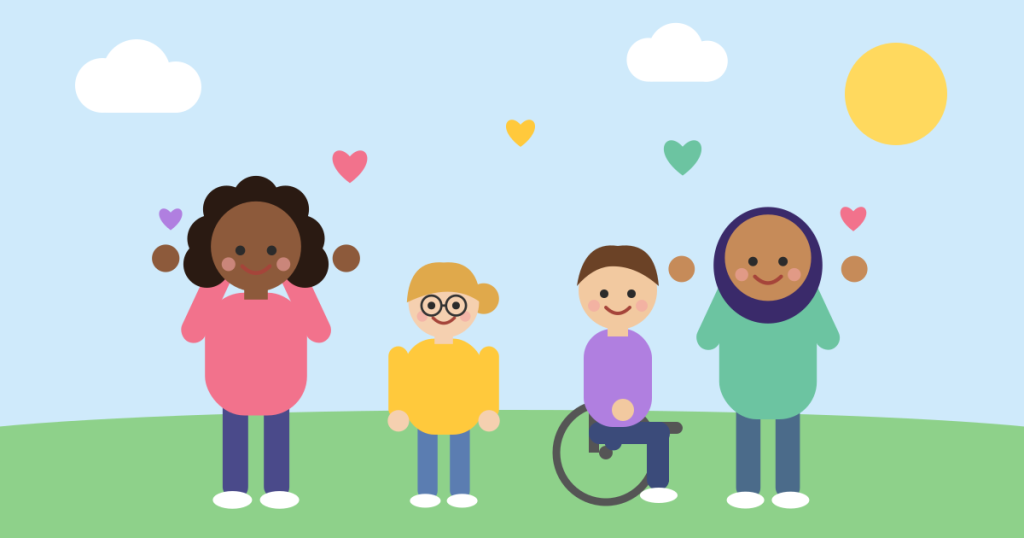
Kids are nosy. If you have spent five minutes around a four-year-old in a grocery store line, you already know they have zero filter. They will lock eyes with someone who looks a little different, lift a finger, point straight at them, and ask the loudest question possible right by the cereal boxes.
Most parents panic. Your cheeks burn, your stomach drops, and before the kid even finishes getting the syllables out, you grab their wrist, yank them backward, and hiss: stop looking, don’t stare, be polite.
Then you scurry toward dairy like you just robbed the place.
Here is the thing, though. You think you are protecting the person in front of you from feeling awkward. What you are actually teaching your own kid is that physical differences are a dirty secret you have to sprint away from. You turn an ordinary human into something taboo.
What Actually Goes on Behind Those Stares
When Briggs was little, you felt that tension everywhere you went. If your kid uses an adaptive stroller with thick straps, or has a port-wine birthmark stretching across their face from Sturge-Weber syndrome, people look. It is just basic biology.
Human eyes naturally latch onto stuff that breaks everyday routines. A toddler has seen five hundred kids running in sneakers; they have not seen someone tilted back in a medical chair making soft humming sounds instead of yelling across the aisles.
So they freeze. They look.
The problem is almost never the kid looking. The problem is the sheer, sweating awkwardness of the grown-up holding their hand. Grown-ups act like catching someone’s eye is an insult.
When you yank a kid away in horror, what does the kid take away from that?
- That person is broken.
- Mom is scared of them.
- If I look, I get in trouble.
That is how ordinary playground curiosity rots into lifelong discomfort around people with disabilities. We teach it to them, usually on aisle four next to the Pop-Tarts.
Ditch the Lecture and Just Say Hi
You do not need a whole pediatric neurology speech memorized to handle this in public. Nobody wants a twenty-minute TED talk when they are just trying to buy bread.
Keep it simple.
Next time your kid stops dead in their tracks to stare at someone’s wheelchair, medical gear, or birthmark, do not yank them away. Take a breath. Walk up a step, smile at the parent or the older sibling pushing the stroller, and let normal interaction happen:
- Say the name out loud: “Hey, I’m Sarah and this is Leo. How are you guys doing today?”
- Give blunt, neutral facts: If your kid asks why his legs are strapped in, answer without dramatic whispers: “His muscles work differently than yours, so his chair helps him sit up straight.”
- Find the overlap: “Leo loves trucks too, look at his sneakers.”
That is it. You take the weirdness out of the air in five seconds flat.
Siblings Carry This Stuff Every Day
Watching IV walk beside Briggs taught me more about genuine advocacy than any textbook ever could.
Siblings notice the stares long before parents do. A big brother catches the sideways glances, the quiet whispering behind hands, the kids backing up near the swings like medical gear might be contagious.
And yeah, some days an older brother gets tired of being an unpaid educator for the whole neighborhood. Some days you just want to eat your fries without someone tracking every bite your family takes.
Jax feels that exact tug in the book. It is honest.
The flip side, though, is that siblings show the rest of the world how to act without saying a single word. When a big brother leans down, wipes a chin, hands over a favorite toy, and keeps talking to his little brother like nothing on earth is wrong, every single kid watching that sandbox gets an instant lesson in loyalty.
Love Does Not Need a Whole Speech
Eddie does not talk with words. He does not yell across the living room or say goodnight out loud.
None of that matters. If you sit next to him on the carpet long enough, you figure out that holding someone’s hand, humming along to the same tune, or just parking your chair next to theirs says everything that needs saying.
Stop acting like differences are something we need to sweep under the rug. Next time you see a kid like Eddie out in the world, do not look away, do not yank your own children into the next aisle, and definitely do not freeze up like a deer in headlights.
Just smile, wave your hand, and say hello. It really is that simple.